Blogger Comment: All planned by the Globalist Davos crwd decades ago and people said it would never happen…but you should also now, double-check all the things that the Globalists have stated and you said would never happen also…just checking… https://world-freedom.co.uk/
..
Getting a driver’s license at 16 has been a rite of passage for generations, offering teenagers their first real taste of independence and putting car ownership at the heart of the American Dream.
But one of Uber’s top executives predicts that tradition could largely disappear within just 15 to 20 years.
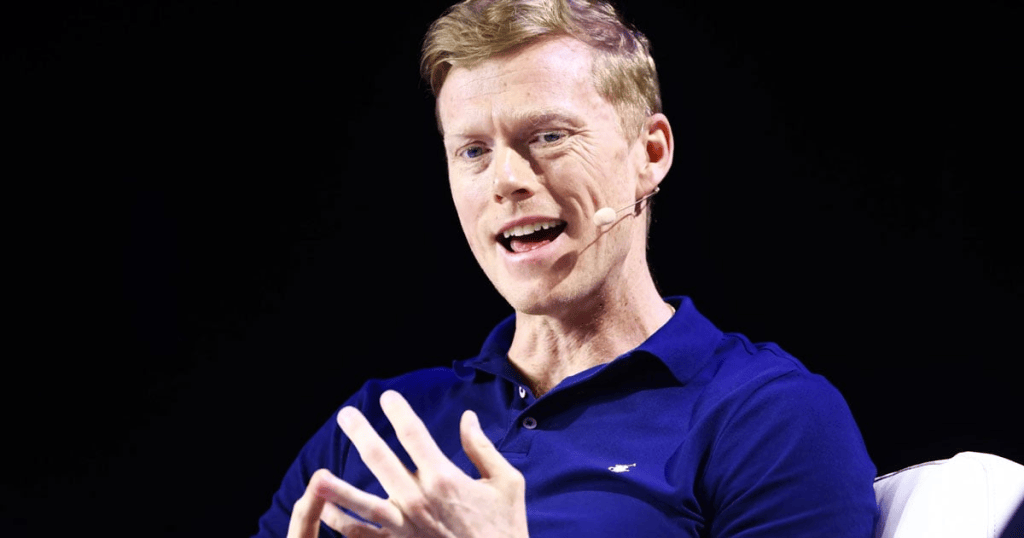
Uber President and Chief Operating Officer Andrew Macdonald says Americans could eventually stop owning personal vehicles altogether as autonomous cars, ride-hailing services, public transportation, bicycles, and scooters replace the privately owned automobile.
And if people no longer own or drive cars, Macdonald argues, they may no longer need driver’s licenses either.
“In some future world, maybe not five years, but 15 or 20 years, everyone’s going to be like Harry—nobody’s going to own a car,” Macdonald said during an appearance on the “20VC” podcast with host Harry Stebbings.
“Nobody’s going to have their driver’s license because you’ll be able to get around,” Macdonald continued.
“And I think bikes and scooters will be part of that. I think autonomous vehicles will be part of that.
“I think public transportation will be a big part of that, but I don’t think you need to own a car.”
The prediction envisions a dramatic transformation of American life, replacing individual vehicle ownership with a transportation system increasingly built around shared services and autonomous technology.
‘The Most Inefficient Asset That Anyone Owns’
Macdonald argues that the economics of private vehicle ownership are already becoming increasingly difficult to justify.
New-vehicle prices have risen approximately 30 percent over the past six years, while most privately owned vehicles spend nearly all of their time parked.
“The individually owned car is the most inefficient asset that anyone owns, and certainly at any level of price point,” Macdonald said.
“It sits idle 98% of the day. It’s depreciating.
“The ongoing operating costs are actually high—even if you’re not driving it, you’re paying for that insurance clip.”
For generations, however, Americans have accepted those costs for something that cannot be measured solely by how many hours a vehicle spends moving.
A personal car provides the ability to travel when and where its owner chooses without waiting for a ride-hailing service, relying on public transportation, or depending on an autonomous fleet.
For teenagers in particular, earning a driver’s license has traditionally represented a major step toward adulthood and independence.
Macdonald’s vision would fundamentally change that relationship, shifting transportation away from privately owned vehicles and toward access to mobility provided by outside services.
Uber Positions Itself for Driverless Future
Such a transformation would also create an enormous opportunity for Uber.
The company abandoned its attempt to develop its own self-driving fleet and instead positioned itself as a platform through which autonomous vehicle companies can reach passengers.
Uber has partnered with autonomous-driving companies including Waymo and Waabi to place their vehicles on its network.
That strategy allows Uber to benefit from the growth of self-driving technology without having to build the underlying autonomous systems itself.
Uber CEO Dara Khosrowshahi has offered a similarly dramatic forecast for the company’s future.
Khosrowshahi has predicted that within 15 to 20 years, a majority of Uber trips could be completed by robots of some kind.
Autonomous vehicles are already operating in major American cities, pushing what was once largely experimental technology into everyday transportation.
As those fleets expand, the industry is also beginning to reorganize human jobs around machines capable of replacing drivers on some trips.
Uber Executive Sees Transportation Model Changing
Macdonald has spent much of his career watching Uber reshape how people move through cities.
The Canadian executive graduated from Western University’s Ivey Business School in 2007, worked at Bain, and briefly pursued entrepreneurship before joining Uber in 2012.
He is now the company’s longest-tenured active employee.
Stebbings said he asked Khosrowshahi what makes Macdonald particularly effective.
“People really like him, but he is an execution machine,” Stebbings recalled Khosrowshahi saying.
“And he is very good at driving people.”
Macdonald said his approach rests largely on two principles: making decisions based on what is best for Uber, even when dealing with relatively minor issues, and maintaining an unusually detailed understanding of the business.
After 14 years at the company, Macdonald said he knows ride-hailing “better than anyone in the world.”
From American Independence to Transportation as a Service
Whether Americans will willingly abandon their cars on the scale Macdonald predicts remains an open question.
His forecast would require more than simply replacing human drivers with autonomous vehicles.
It would mean convincing millions of Americans that owning their own vehicle, and having the freedom to drive it themselves, is no longer worth the expense.
That would represent a profound cultural shift in a country where the automobile has long symbolized mobility, privacy, independence, and personal freedom.
Uber is betting heavily on a future in which transportation increasingly becomes a service rather than something Americans own themselves.
If Macdonald is right, the consequences could extend well beyond what sits in the driveway.
Within a generation, even the teenage ritual of earning a driver’s license could become a relic of an America built around people driving their own cars.
Follow the link for the source… https://slaynews.com/uber-president-predicts-private-car-ownership-drivers-licenses-disappear-nobody-own-car/
And,
READ MORE – EU Mandates Driver-Facing Cameras in Every New Car

