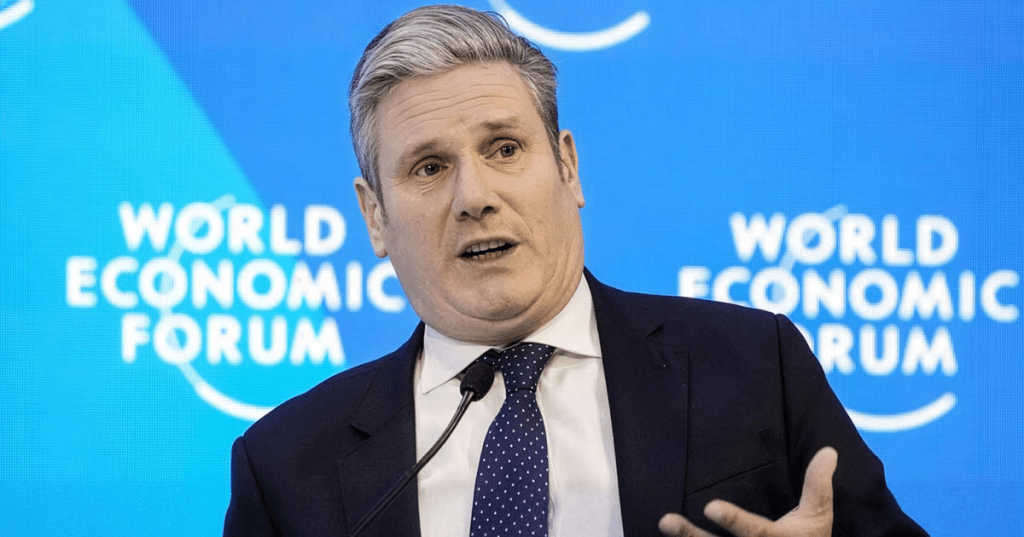
Blogger Comment: The Globalist controlled Starmer government is bit-by-bit controlling the country and its people and all part of the Globalist’s ‘master plan’ developed over decades for the western world in particular and put fully into motion in 1971 for the British people and Global humanity…for when the Police Ai instrument comes into play, it will compound the whole consolidation of the police state…so you had better be aware that your freesdoms are being constantly curtailed and eroded as you go day-by-day just trying to live…and where 2030 now looms large…
.
The British government is accelerating its march toward a full-scale digital surveillance state, granting regulators sweeping new powers to pressure online platforms into censoring content whenever officials declare a vaguely defined “crisis.”
The move has sparked alarm among free speech advocates, privacy campaigners, and civil liberties groups who warn that the Online Safety Act is rapidly evolving from a child-protection law into a powerful censorship tool capable of suppressing politically inconvenient speech.
Under the new framework, communications regulator Ofcom can direct social media companies and online platforms to implement enhanced moderation measures during periods of alleged public disorder, with government officials also threatening criminal consequences for those accused of spreading what authorities deem to be “false information.”
The measures create a dangerous precedent that allows unelected regulators and government officials to determine which information the public is allowed to see during politically sensitive events.
Government Expands Powers Following Belfast Unrest
Northern Ireland Secretary Hilary Benn confirmed that regulators will use strengthened powers to target online content during what the government describes as “times of crisis.”
The announcement came following unrest in Belfast after a violent knife attack involving an asylum seeker, which triggered protests, clashes with police, vehicle fires, and attacks on property.
Benn argued that misinformation circulating online contributed to the unrest and warned that publishing “false information” could potentially constitute a criminal offense.
However, when pressed on how the government intends to define a “crisis,” Benn admitted that the criteria have yet to be finalized.
That uncertainty has fueled concerns that officials could apply the label broadly whenever politically sensitive events generate public backlash.
Ofcom Orders Platforms to Prepare Emergency Censorship Measures
Ofcom has already begun implementing the new framework.
In an open letter to technology companies, the regulator cited the Belfast unrest as justification for enhanced moderation powers.
The letter warned that “usual content moderation systems and processes may not be sufficient” during crisis events and instructed platforms to prepare procedures for responding to sudden increases in content that authorities classify as “offensive” or “harmful.”
The regulator specifically pointed to material that could allegedly stir up “hate,” provoke violence, or contribute to public disorder.
Notably, the guidance contains no reference to protecting children, which is the justification repeatedly used to sell the Online Safety Act to the public.
Instead, the focus is now squarely on regulating speech during political and social unrest.
Critics argue this represents a dramatic expansion of the law’s original purpose.
WATCH:
Vague Definitions Raise Alarm
The government’s own emergency planning guidance has intensified fears that the definition of a crisis could be stretched far beyond genuine emergencies.
According to Cabinet Office guidance, the terms “crisis” and “emergency” are treated interchangeably under existing legislation.
That definition encompasses not only events causing harm but also situations that merely have the potential to cause harm.
As a result, critics warn that future governments could invoke crisis powers during protests, political demonstrations, controversial elections, immigration disputes, economic unrest, or any number of politically sensitive developments.
No additional parliamentary vote would be required before regulators begin demanding enhanced censorship measures.
Pressure Campaign Against Independent Reporting
The controversy has been compounded by reports that government officials contacted journalists covering the Northern Ireland unrest and attempted to influence how events were described in media reports.
According to communications shared online, reporters were allegedly instructed on preferred language and framing while Ofcom simultaneously issued censorship guidance to technology platforms.
Critics say the combination raises serious concerns about coordinated efforts to shape narratives across both traditional media and online platforms during periods of unrest.
Many fear the ultimate goal is to limit access to alternative information sources and ensure that government-approved narratives dominate public discussion.
AI-Powered Surveillance Network Expands
The censorship push is unfolding alongside the government’s rollout of PoliceAI, a £115 million initiative that centralizes artificial intelligence operations across police forces throughout England and Wales.
The program incorporates facial recognition systems, predictive policing tools, automated data analysis, and large-scale monitoring capabilities.
In practice, these systems give authorities unprecedented power to scan vast quantities of online communications and identify individuals associated with content deemed problematic during government-designated crises.
Critics warn that combining AI surveillance with Ofcom’s censorship powers creates the infrastructure for real-time monitoring and suppression of political speech on a national scale.
Digital ID and Device Scanning Plans Advance
The latest developments also coincide with broader efforts to expand digital surveillance throughout British society.
Government proposals include device-level content scanning, age-verification requirements, digital identity systems, and potential restrictions on phones and online services for users who refuse verification requirements.
Technology companies that resist certain mandates could face severe penalties, with some proposals including prison sentences for executives who refuse to comply.
Encrypted messaging platform Signal has already warned it would leave the UK market rather than weaken its end-to-end encryption protections.
Signal President Meredith Whittaker has stated that the company would “absolutely, 100% walk” away from Britain rather than participate in systems that compromise user privacy.
Critics Warn of Emerging Surveillance State
Civil liberties campaigners argue that the various initiatives are not isolated policies but components of a broader surveillance architecture being constructed across the United Kingdom.
Big Brother Watch Director Silkie Carlo warned that the proposals would effectively create mandatory identification requirements for internet access while destroying online anonymity.
She described the measures as a historic turning point that could transform Britain into one of the most heavily monitored digital societies in the Western world.
For free speech advocates, the pattern is becoming impossible to ignore.
As regulators gain expanded authority to suppress content during loosely defined crises, AI systems are deployed to monitor communications, digital IDs become increasingly mandatory, and encrypted services come under pressure, opponents say the UK is steadily constructing the infrastructure for unprecedented state control over speech, privacy, and access to information.
The battle now centers on whether citizens, technology companies, and free speech advocates can stop that transformation before it becomes permanent.
Follow the link for the source… https://slaynews.com/uk-block-legal-harmful-information-during-crisis-events/
And,
READ MORE – Officials Issue Alert as Abortion Drugs Found in America’s Water Supply

