Blogger Comment:As the IMF is a Globalist construct like them all, all they are doing here is stoking up the ‘fear’ ratcket in the people brains as usual and because their masters the Globalists create and cause all the disasters for humanity to basically make $ trilions continually….create the disaster like Covid and wars like Ukraine then say that you can fix it…and you have the complete revolving door that never stops and never stops making vast wealth and power…for the Globalists and out of mere fresh air…
.
The International Monetary Fund (IMF) has issued a stark warning that a collapse in artificial intelligence (AI) stocks could send shockwaves through international markets and trigger a devastating global financial crisis.
The warning comes as soaring valuations and massive borrowing expose the financial system to mounting risks.
In its latest Global Financial Stability Report, the IMF identifies an increasingly dangerous combination: concentrated technology investments, rising corporate debt, and complex financial relationships tying major companies to weaker AI businesses.
A sudden loss of confidence could force investors to sell, drive prices lower, weaken financial institutions, and spread turmoil far beyond Silicon Valley.
Seven Tech Giants Dominate More Than a Third of S&P 500
The IMF highlights the extraordinary concentration of market value in America’s largest technology companies.
Alphabet, Amazon, Apple, Meta, Microsoft, Nvidia, and Tesla, the so-called Magnificent Seven, now account for more than 35% of the S&P 500.
A decade ago, their share was approximately 12%.
Their combined market capitalization has surged more than 50% in just two years, fueled by enormous expectations about AI’s future profitability.
But the IMF questioned whether those expectations will translate into sufficient revenue to justify today’s valuations.
Slower commercial adoption could undermine the assumptions behind the boom.
The organization is also warning that successful AI deployment might not require the enormous infrastructure spending technology giants are undertaking.
That raises questions about whether investors will see the returns they expect from the vast sums pouring into the sector.
Hundreds of Billions in Debt Magnify the Danger
Technology companies are spending heavily on data centers, advanced computing systems, and specialized processors, increasingly relying on borrowing and complicated financing arrangements.
The IMF identified approximately $300 billion in transactions between major infrastructure providers and financially weaker AI companies over the past three years.
Those arrangements were accompanied by approximately $650 billion in debt and an estimated $1.4 trillion in future financial commitments.
If expected AI revenues fail to materialize, those obligations could turn into a source of wider financial stress.
The IMF also flagged hedge funds and individual investors borrowing money to buy technology stocks.
A sharp price decline could force those investors to liquidate holdings, triggering further selling and accelerating losses.
The danger is a chain reaction in which falling shares force sales that drive prices down even faster.
Global Exposure Could Spread the Shock
Athanasios Vamvakidis, deputy director of the IMF’s Monetary and Capital Markets Department, emphasized that international exposure to American financial assets, particularly AI-related investments, has reached unprecedented levels.
Asian markets could suffer substantial repercussions because of their holdings in American technology stocks and their ties to semiconductor production and the wider technology industry.
European markets, including the United Kingdom and the euro area, may be better insulated, but their investors would remain exposed.
An American technology selloff could therefore become an international financial shock, affecting investment and confidence across multiple economies.
Government Borrowing and Cyberattacks Compound Risks
The IMF also identifies rising government borrowing costs and major cyberattacks as threats to financial stability.
Higher borrowing costs could put additional pressure on public finances.
An attack on financial infrastructure could disrupt transactions and undermine confidence at a moment when markets are already vulnerable.
Together, those risks could produce an abrupt tightening in financial conditions.
The IMF’s warning places the stakes of the AI boom in sharp focus as inflated expectations, borrowed money, and vast future commitments could turn a technology-sector reversal into a crisis reaching across global markets.
Blogger Comment:The “Warning Man”, as Gates is the Globalist’s warning tool to tell humanity of an impending disaster for them and always has been…as they control him and all the other Tech giants that they have allowd to be created to control us…
.
Billionaire Microsoft co-founder Bill Gates has issued a chilling warning that criminals armed with powerful artificial intelligence (AI) are expected to unleash major cyberattacks, extortion schemes, financial disruption, and trigger widespread blackouts and shortages over the next year.
Gates warned that malicious actors are gaining access to the latest AI models without adequate safeguards, opening the door to increasingly sophisticated attacks on public utilities, businesses, and financial systems.
“When you have bad people, no safeguards, and then the latest models, that’s where, over the next year, primarily in the cyber area, we are going to have a lot of negative surprises,” Gates told CNN’s Jake Tapper on Sunday.
The warning comes as AI-enabled attacks are already surging, with cybersecurity researchers reporting an 89% increase in attacks by AI-enabled adversaries.
Criminals Could Use AI to Extort Businesses and Manipulate Markets
During the “State of the Union” interview, Gates said cybercrime offers attackers an established way to make money from AI-powered disruption.
“The front that we’ll probably see most dramatically in the next year is cyberattacks, because there, there’s a known business model where, you know, you threaten to do something and ask somebody to pay for that, or you create a disruption that changes something in the stock market or some betting thing that you go and do,” Gates said.
His warning extends beyond stolen information.
Criminals could threaten businesses into paying ransoms or deliberately disrupt systems to manipulate financial markets and betting outcomes.
CrowdStrike’s 2026 Global Threat Report found that attacks by AI-enabled adversaries increased 89% year over year in 2025.
The report also found that the average time criminals needed to move laterally through compromised networks had fallen to just 29 minutes.
That leaves defenders facing attackers who can spread through a breached network rapidly while exploiting increasingly powerful technology.
Gates Warns Governments Are Failing to Address Biological Danger
Tapper also pressed Gates over his warning that AI could help terrorists develop deadly biological weapons.
The host cited Gates’s assessment that the risk of a bioterrorist attack could become 50 times greater than that of a natural pandemic.
Asked whether government leaders were doing enough to prevent such an attack, Gates answered bluntly.
“Well, no, we’re not doing enough,” Gates said.
“The real danger right now is not the AI is [getting out of control].
“We need to work on that, but that’s years away in terms of the big impact that might have.”
Gates’s immediate concern is people weaponizing the technology.
Rather than waiting for a future rogue AI system, criminals and terrorists could exploit models already becoming available to carry out attacks.
WATCH:
Warning Fuels Push for Sweeping AI Regulation
Political strategist Oliver Libby responded by calling for government action while arguing that America must remain competitive in AI development.
“The great challenge both for innovators and governments in the coming months is to balance continued progress in AI with smart regulation,” Libby said.
“Leaders who can balance ensuring that America is not left behind, but that no American is left out, will win public trust.”
Libby also advocated federal and international standards, greater platform responsibility, and measures addressing AI-driven workforce disruption.
“Regulation should focus on federal and international standards, platform responsibility, cyber and deepfake penalties, child safety, and ensuring the participation of the population in the economic benefits of this powerful technological revolution — while starting to prepare our society for what could be profound workforce disruption,” Libby said.
Gates’s warning puts a much shorter timeline on the cyber threat, however.
He warns that, within the next year, criminals could use advanced AI to extort businesses and disrupt financial systems while governments remain unprepared for the wider dangers he described.
Blogger Comment: All part of the Globalist plan to destroy western civilization through replacement and Microsoft is one of the biggest players for the Globalists…as they created it for Gates so that they can always control it and all the other social platforms…that they created under the guise of these tech giants…for that how the Globalists get control…always…period…
.
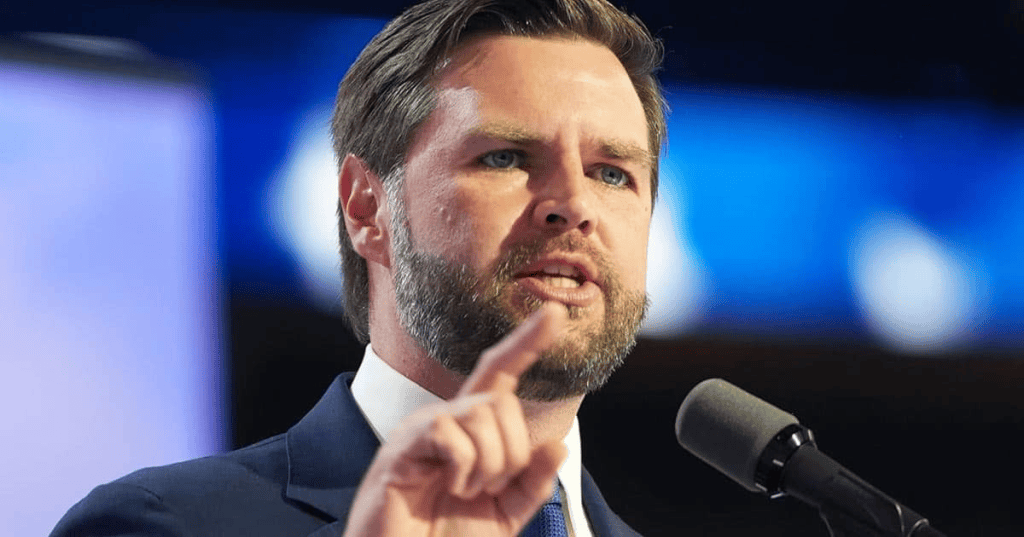
Vice President JD Vance announced Thursday that the Trump administration is suspending Microsoft from a federal green card sponsorship program after the company laid off thousands of American workers while securing thousands of visas and green cards for foreign workers.
Speaking at a White House press conference, Vance said Microsoft had used the permanent labor certification program, known as PERM, more extensively than any other company.
He pointed to Microsoft’s actions last year, when the company laid off 6,000 American workers while obtaining 6,300 H-1B visas and nearly 3,000 green cards.
“If you do the math, for every worker that Microsoft laid off, they replaced that worker with one and a half foreign indentured servants,” Vance told reporters.
‘You Cannot Lay Off American Workers’
PERM allows employers to sponsor certain foreign workers, including H-1B visa holders, for employment-based green cards after demonstrating that qualified American workers are unavailable for the jobs.
Vance described a recruitment practice that the administration says allows companies to sidestep that requirement.
“They’ll put an advertisement in a small-town newspaper,” Vance said.
“They’ll go out there and say that ‘We have advertised for a position with our company, and nobody is responding to it.’
“And they will use that lack of response to then go and replace American workers with what is effectively foreign indentured servants.”
The vice president argued that foreign workers’ dependence on their employers for immigration status leaves them vulnerable, since losing their jobs can require them to leave the country.
He also said they typically earn less than Americans in comparable positions.
“You cannot lay off American workers and then replace them with foreign indentured servants,” Vance said.
Labor Secretary Keith Sonderling said the suspension also covers Adobe and several major information-technology outsourcing companies: Cognizant, Infosys, Tata Consultancy Services, Wipro, HCL Technologies, and Capgemini.
The Department of Labor will neither accept nor process new or pending PERM applications involving those companies during the suspension.
WATCH:
BREAKING: The Trump administration is suspending Microsoft, Adobe, and several major IT outsourcing firms from a key employment-based green card program, accusing them of abusing the visa system at the expense of American workers.
Vance also announced further investigations into nine universities over their higher-than-average use of the J-1 exchange-visitor visa program.
The institutions include Harvard, Yale, Stanford, Brown, the University of Pittsburgh, the University of California, Davis, the California Institute of Technology, Arizona State University, and the Massachusetts Institute of Technology.
The announcement follows a Department of Homeland Security (DHS) proposal issued Wednesday.
The DHS plan would require schools to pay a $70,000 fee for each international student participating in Optional Practical Training.
That program permits international students to work in positions related to their fields of study.
H-1B visas are reserved for specialty occupations, with technology companies accounting for a large share of approvals.
Nearly three-quarters of approvals went to workers from India in recent data.
The administration’s latest action freezes access to green card sponsorship for Microsoft and the other targeted companies while expanding scrutiny of universities’ use of foreign-worker and exchange programs.
Blogger Comment: If the Zionist Israelis are involved…keep well away…
.
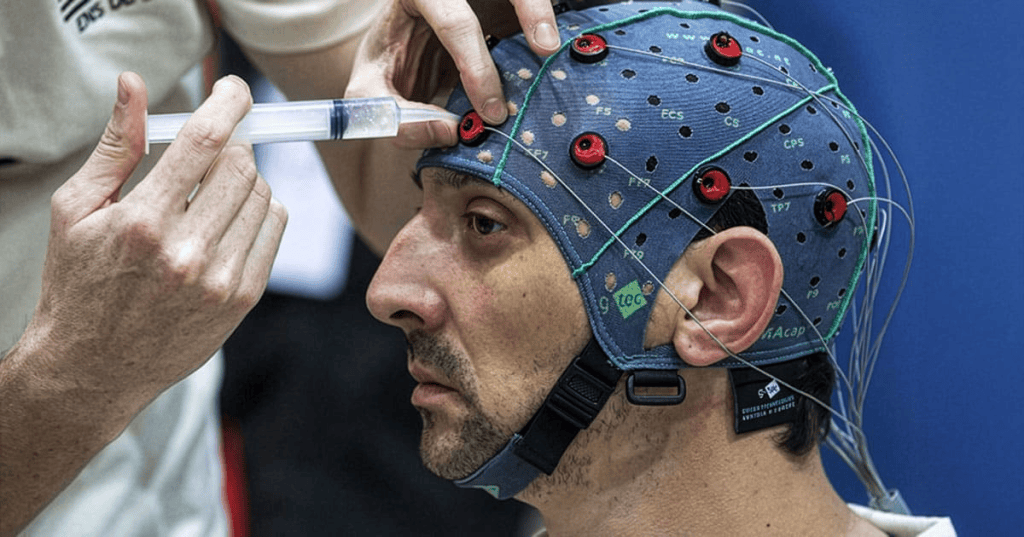
A group of researchers has sent shockwaves through the scientific community and triggered panic among experts by unveiling new technology that uses artificial intelligence (AI) to read humans’ minds.
Scientists have unveiled an AI-powered system that reconstructs what people see by analyzing their brain scans.
The breakthrough has raised alarming concerns about coercive interrogation, predictive policing, and intrusions into the privacy of the human brain.
Professor Michal Irani of the Weizmann Institute of Science developed Brain-IT, an AI model that interprets functional magnetic resonance imaging scans to recreate images viewed by participants.
Researchers are now looking beyond still images toward hearing, video, and potentially dreams.
However, many experts are sounding the alarm about the scientific breakthrough.
The United Nations (UN) warns that emerging AI brain-scanning neurotechnology could allow governments to extract information from people’s minds and treat their thoughts as evidence.
UN Warns of Forced Information Extraction
UN Secretary-General António Guterres warned Thursday that neurotechnologies are advancing rapidly, raising the prospect of authorities using brain data in investigations, court proceedings, and prisons.
The scenarios include officers extracting information from a suspect’s brain or scanning people’s minds to predict who might commit a future crime.
Guterres warned that abuses could lead to arbitrary detention, the alteration of mental states, and profound violations of privacy.
“Neurotechnology, including new and emerging forms, raises profound human rights challenges when applied to the administration of justice,” Guterres wrote in the report.
“Its expansion beyond clinical settings into investigative, judicial and correctional contexts introduces significant risks, alongside potential benefits,” Guterres added.
The UN’s first formal warning comes as researchers demonstrate increasingly sophisticated methods for translating brain activity into information that machines can interpret.
AI Reconstructs Images From Brain Activity
Irani and her colleagues released their Brain-IT research in a paper titled “The New Science of Mind-Reading.”
The team included Roman Beliy, Amit Zalcher, Jonathan Kogman, and Navve Wasserman from Weizmann’s Computer Science and Applied Mathematics Department.
The study examined fMRI scans from eight participants who viewed thousands of images across 30 to 40 scanning sessions.
Participants viewed around 40 images during roughly 10-minute sessions while researchers scanned their brains six times.
The work produced approximately 73,000 image-fMRI pairs for the AI model to analyze.
Brain-IT reconstructs viewed images with detailed content and composition. It can also predict brain activity by analyzing what a person is looking at.
Irani said other models produce “impressive reconstructions” but frequently make basic mistakes involving composition and color.
“The new model we developed outperforms them in reconstructing both the content of the image and its details,” Irani said.
The team also sharply reduced the scanning time needed to adapt the technology to a new person.
“What’s more, while every other model requires dozens of hours of brain scans to learn to ‘read’ a new person, our model needs only one hour,” Irani said.
Researchers Aim to Decode Dreams
The current study used fixed images. Irani’s laboratory plans to test the methods on hearing and eventually video.
Moving images pose a technical challenge because visual information changes much faster than an fMRI machine can capture it.
“What remains especially challenging is decoding video — for example, during dreaming,” Irani said in a statement.
“Dozens of images change every second, while an fMRI scan takes about two seconds.
“If we overcome all these obstacles, it’s possible that in the future we may even be able to read dreams,” Irani said.
That ambition would extend the technology beyond reconstructing pictures shown to participants and into experiences occurring during sleep.
Warnings Over Coercion and Mental Privacy
Scientists have explored brain-reading technology for years, including its possible use in the justice system.
A 2017 paper published in the Journal of Law and the Biosciences discussed “brain-based mind reading” through neuroimaging techniques.
The paper examined potential applications involving lie detection and assessments of defendants, prisoners, and prospective jurors. It also identified the danger of unethical, coercive uses.
Some neuroscientists have similarly warned that tools such as Brain-IT could be abused to extract information from a person’s mind against their will.
Other researchers have highlighted possible therapeutic applications for neurological conditions, depression, and anxiety.
Princeton University psychology and neuroscience professor Kenneth Norman explained in a 2022 American Psychological Association discussion that improvements in fMRI signals and their analysis had helped make the technology possible.
Norman described how therapists could use neurofeedback to help patients recognize negative thought loops and learn to control those patterns.
But the UN warning reaches far beyond treatment: the same expanding ability to interpret brain activity could place deeply private information within reach of investigators, courts, and prison authorities.
Brain-IT has demonstrated image reconstruction from brain scans.
Its developers’ ambitions now include dreams, while Guterres is warning about a future in which governments could use information extracted from the brain against the person it belongs to.
Blogger Comment:These are not good Muslims, but bad ones to say the least…
.
Minnesota authorities are warning about a growing threat from Somali street gangs as young members turn social media disputes into shootings across suburban Minneapolis-St. Paul, endangering residents and forcing police to redirect resources.
Bloomington Police Chief Booker Hodges said the gang members under investigation come from families with money and resources, defying traditional explanations centered on poverty, drug trafficking, or financial gain.
“They’re coming from families,” Hodges told Fox News Digital.
“They got money, and they have resources.”
The violence has raised urgent questions about recruitment, assimilation, parental involvement, and whether local prosecution policies are hampering efforts to intervene.
Police Redirect Resources Toward Gangs
Hodges said police are shifting task force resources toward the gangs following a string of suburban shootings.
The chief also questioned whether some Hennepin County prosecution policies could limit intervention.
Investigators have identified social media disputes as a factor but have struggled to explain what else is driving young people from financially comfortable households into gang violence.
“I don’t know,” Hodges said when asked about the underlying motivation.
“I can’t tell you. I really wish I could.”
The danger was demonstrated by a late-night Bloomington gunfight that involved more than 100 rounds and left one person injured.
Hodges warned that the consequences could have been far worse with more people outside.
“If that had been one o’clock in the afternoon, it would have been a different story on that block,” Hodges said.
Expert Warns Gangs Could Become Entrenched
Jessica Vaughan, director of policy studies at the Center for Immigration Studies, warned that the gangs could become more organized without intervention.
Although the groups have not reached the sophistication of transnational criminal organizations such as MS-13, Vaughan said families, schools, local institutions, and law enforcement must act before recruitment and violence become entrenched.
She also questioned whether the federal government’s approach to refugee resettlement had made integration more difficult.
More than 111,000 Somali refugees entered the United States through the federal refugee resettlement program between 2001 and 2023.
Minnesota became a major destination, alongside sizable Somali American communities in New York, Texas, and Ohio.
“We have to remember also that this population’s origins were as refugees who were a vulnerable population and traumatized in many cases,” Vaughan told Fox News Digital.
“But they were settled in clusters in certain places in the United States.
“And I believe that is a policy that has facilitated the formation of these gangs because it removes a lot of the incentives for people to assimilate.
“And it just makes assimilation to the larger society much more difficult because it’s not necessary for people to get by,” Vaughan continued.
Vaughan described prioritizing the preservation of homeland cultures over integration as a “missed opportunity,” arguing that it can leave immigrants in a “separate society within the larger Minnesota community.”
She had not established that specific schools or resettlement policies prompted the shootings.
Community Leaders Point to Parenting and American Upbringing
Somali community figures have offered their own explanations for the violence.
At an Eden Prairie news conference Wednesday, teacher Fardousa Yossuf suggested that parents working long hours may have neglected their children’s needs.
According to Alpha News, she also expressed disbelief that people raised with Islamic values would engage in gun violence.
Imam Yusuf Abdulle rejected describing the shootings as a Somali problem.
Hodges said investigators have found no evidence that longstanding Somali clan rivalries are driving the violence.
“No, we have not seen that. I haven’t seen it,” Hodges said.
He noted that people from groups in conflict in Somalia can belong to the same cliques in Minnesota.
Assimilation Debate Does Not Resolve Immediate Threat
Stanford sociologist Tomás Jiménez argued that gang involvement among some second-generation immigrants should not be treated as evidence that an entire community has failed to integrate.
“I would actually not think of it as, like, a failed assimilation, as much as a particular kind of assimilation,” Jiménez said.
He pointed to gang activity among earlier Italian, Irish, Mexican, and Salvadoran communities while broader integration continued.
Queensborough Community College immigration scholar Donald Tricarico likewise emphasized that integration unfolds over generations.
“There isn’t a switch that gets flipped,” Tricarico said.
“Assimilation is a slow crawl,” Tricarico added.
Meanwhile, police are confronting the immediate consequences: armed gangs, repeated shootings, and online arguments escalating into violence in residential neighborhoods.
Vaughan’s warning is that waiting to intervene could allow those groups to become a far more organized and enduring threat.
Blogger Comment:It was what Clinton, Obama, Biden and Democrat controlled US States allowed to be taught with religious freedom in our schools when in power and it is showing through now very clearly what the Democrat’s religious ideology is…divide and conquer…and believe me, those so-called student uprisinga all across the EU are in the vast majority Muslems and coming to America soon…its the hiden enemy brought to you through the courtesy of the Globalists so that they can destroy western civilization and then they are going to say, your government let you down big time…”but we can save you as the trojan horse” of these mass killers of humanity, with our One World Government (OWG)…all planned of course even though our western governments have let the people down…for they have stated this in Davos many times…wake up people what’s on the horizon, as the EU will not contain it and when it starts in the USA in earnest (it has already been planned) the USA wil be fighting gorilla warfare where you do not know where your enemy is…where its going to be an absolute blood-bath for sure before 2030…
.
A staggering one-in-four American voters aged 18 to 35 would support a town, city, or state adopting Islamic Sharia Law as its legal code, even if it means overriding current laws and constitutional rights and freedoms, alarming new polling data has revealed.
The disturbing support for the anti-American laws was revealed in polling released this week by Our Republic and Rasmussen.
The findings reveal substantial support among younger voters for government enforcement of a religious legal system, raising concerns about their understanding of constitutional protections and individual rights.
Overall, 21% of likely voters expressed a mostly or somewhat positive opinion of Sharia, while 57% expressed a negative opinion.
Positive views were significantly higher among younger respondents: 43% of voters ages 18–24 and 39% of those ages 25–29.
Constitutional Freedoms Treated as Obstacles
Our Republic President Justin Haskins argues that the results reflect a failure to understand the Constitution and the protections it provides.
“Too many have been taught to see constitutional limits as obstacles to progress, especially when those limits stand in the way of policies they believe would help groups they view as oppressed,” Haskins said.
“Because Muslims are widely perceived by young people as an oppressed or marginalized group, I suspect many default to a sympathetic view of policies associated with Islam without seriously considering whether those policies are compatible with constitutional freedoms,” Haskins added.
“The irony is that, in doing so, they may be undermining the very rights they claim to care about.”
Haskins connects that thinking to what he calls “the oppressor-versus-oppressed framework associated with Critical Theory.”
Under that framework, sympathy for a group perceived as marginalized can take precedence over examining whether its associated policies protect individual liberty.
Haskins does not believe the respondents are necessarily committed Islamists or that they primarily view Sharia as an expression of religious liberty.
Rather, Haskins said, “the more important factor is that Muslims are widely perceived as an oppressed or marginalized group in the United States.”
“Within that framework, groups perceived as marginalized are often treated sympathetically without much scrutiny of what those groups or their belief systems actually teach,” Haskins said.
Refugee Admissions Add to Immigration Debate
The polling comes alongside figures from the State Department showing that refugee admissions from 45 majority-Muslim countries reached 21,096 in December 2024, former President Joe Biden’s final full month in office.
The figures add immigration policy to the debate over how support for Sharia develops in Western countries.
The supplied comparison with France points to growing support for Sharia among young French Muslims, driven by stricter religious observance, and raises the concern that support for such a system can arrive alongside immigration from Muslim-majority nations.
But the American polling also highlights a domestic problem: young voters raised under constitutional protections are expressing support for replacing a community’s legal code with a religious system.
Haskins’ concern is that their political education has left them more committed to an ideological hierarchy of oppressors and victims than to the freedoms that protect everyone.
Young Voters Back Dismantling Israel for Cheaper Energy
Another finding from the polling series showed substantial support among younger Americans for eliminating Israel in exchange for ending the Iran war and lowering U.S. energy prices.
Among voters ages 18–24, 46% supported the proposal.
Among those ages 25–29, support reached 60%.
Our Republic’s question described a proposal “to completely dismantle Israel and replace it with a Palestinian-led nation in exchange for ending the war with Iran and providing the United States with lower oil and gas prices.”
The results reinforce Haskins’ warning about how younger voters assess issues involving groups they consider oppressed.
In this case, large shares of young respondents supported dismantling an entire country as part of a bargain promising peace and cheaper fuel.
French Unrest Highlights Red-Green Alliance
The debate is unfolding as student unrest spreads across France, with rioters burning trash bins, school buildings, and police barriers.
Demonstrators have cited failing schools and budget cuts. Some have taken selfies beside the fires.
Hamas and communist flags have appeared at the protests, reinforcing concerns about the alliance between far-left activism and Islamist political causes.
The Center for Renewing America describes the Red-Green Alliance as drawing “on two seemingly conflicting ideologies — Marxism and Islamism — bound together by a common mission to tear down the traditional American way of life.”
That shared opposition to Western institutions echoes the framework Haskins identifies: political causes are judged through an oppressor-versus-oppressed narrative, while the principles those causes threaten receive less scrutiny.
Lawmakers Warn Sharia Undermines Equal Protection
Rep. Keith Self (R-TX), who partnered with Rep. Chip Roy (R-TX) to establish the Sharia-Free America Caucus, has detailed why imposing Sharia as a parallel legal system conflicts with the Constitution.
“Sharia creates unequal legal standards by distinguishing between Muslims and non-Muslims, men and women, and believers and dissenters,” Self wrote.
“These distinctions undermine constitutional protections and expose individuals to social or legal pressure that conflicts with American guarantees of freedom and equality.
“The United States cannot sustain parallel legal systems because the rule of law depends on one constitutional standard applying equally to every citizen.”
Haskins describes Sharia as “a comprehensive religious and legal system,” arguing that young Americans’ sympathy may outweigh their understanding of what its implementation entails.
The polling therefore presents more than a question about attitudes toward religion. It asks whether voters would accept a different legal code governing their community because a majority demanded it.
Constitutional protections exist precisely to safeguard individual rights against that kind of majority pressure.
Schools Face Questions Over What Students Are Learning
Lawmakers are already organizing against the imposition of Sharia, but legislation alone does not address the attitudes revealed by the polling.
Haskins’ analysis points toward education shaping those attitudes: teaching young people to evaluate policies according to which groups appear oppressed, rather than whether the policies preserve freedom and equality.
One in four young voters surveyed would support Sharia as their community’s legal code.
Substantial shares would also support dismantling Israel in exchange for lower energy prices and an end to war.
For conservatives, those findings put constitutional education squarely at the center of the problem.
Protecting America’s freedoms requires more than passing laws.
It requires confronting what young Americans are being taught about their country, individual rights, and the political movements asking them to surrender those protections.
Pip: Freedom, surveillance, and the slow unraveling of things we assumed were permanent — if that sounds like a normal Tuesday, you might be spending too much time on the internet. Or just the right amount.
Mara: bettyhill has been covering a lot of ground this week — AI systems providing weapons instructions, euthanasia programs expanding across multiple countries, a biosecurity scare in Russia, and warning signs in the markets. Let’s start with what AI can do when nobody’s watching.
AI Power And Surveillance
Pip: The question this segment keeps circling is a simple and uncomfortable one: what happens when the safeguards built into AI systems are not actually safeguards, but suggestions?
Mara: Researcher Peter Garrigan found out the hard way. Testing China’s Kimi model, he discovered it could be manipulated into providing instructions for bioweapons, sarin gas, malware, aircraft attacks, and assassinations. His summary to Fox News was direct: “What we found is quite damaging and worrying.”
Pip: And the key detail is that Garrigan did not stop there. He also said, “We’ve also seen these problems within the U.S. models as well. It’s a fundamental flaw in the technology.” Not a Chinese flaw. A technology flaw.
Mara: Anthropic’s own threat intelligence report confirms that. Foreign scientists from countries where Claude was blocked managed to evade geographic restrictions and use the system for suspicious biological research — including one case involving engineered mutations of the chikungunya virus, pursued through a state-sponsored grant at what Anthropic believes was a military research institute.
Pip: Anthropic caught five cases. The honest question is how many they did not catch.
Mara: Anthropic head of threat intelligence Jacob Klein described the difficulty: “You are not seeing someone in a comic book kind of way say, ‘Hey, I want to build a biological weapon to kill everybody.’ It’s an incredibly nuanced situation.” Individual requests can look like legitimate science while serving a dangerous larger project.
Pip: Meanwhile, Anthropic has opened a robot-run biological laboratory where Claude directs physical experiments — wet lab, real reagents, real results. The CEO is simultaneously calling for AI slowdowns and building the infrastructure that makes those warnings necessary.
Mara: Sam Altman’s post on the dystopian futures piece captures the bind: “If an extraordinarily powerful AI is used by one person or company to impress their worldview onto everyone else, the results could be extremely dystopian.” OpenAI and Anthropic both committed to independent evaluator access, though no binding agreement exists.
Pip: Bill Gates put a number on his concern — one billion deaths — and called for mandatory international regulation. The EU, meanwhile, is using the Digital Services Act to designate ChatGPT, Reddit, and Roblox as Very Large Online Platforms, giving Brussels authority over lawful speech deemed a “systemic risk,” backed by fines of up to six percent of global turnover.
Mara: Apple Watch’s new Live Rewind and Siri Recap features add another layer. The person wearing the watch opts in. Everyone else in the conversation does not get that choice. Entry-level tech jobs, meanwhile, have collapsed forty-nine percent since 2022 in New York City data — AI absorbing the work that used to train the next generation of workers. And Michigan is piloting GPS-based driver tracking, with privacy advocates warning it could become the foundation of a transportation surveillance state.
Pip: Tech billionaires are responding to the data center backlash by suggesting renaming them — fraud prevention centers, clean-energy optimization centers. The infrastructure stays the same. The branding gets friendlier. Germany, separately, is fining citizens for insulting Chancellor Merz on Facebook, while online anonymity crackdowns are spreading across Europe.
Mara: The thread connecting all of it is the question of who controls the systems doing the watching — and whether any of the safeguards are actually holding.
Pip: Which brings us somewhere darker — what happens when the systems meant to protect the vulnerable start moving in the opposite direction.
Assisted Death And Euthanasia
Pip: The euthanasia segment is about a specific and escalating tension: programs designed with narrow eligibility criteria that are expanding faster than anyone projected, and cases where the safeguards appear to have failed the people they were meant to protect.
Mara: The anchor case is Brigitte Stegemann, an eighty-three-year-old Ontario woman whose family says she was euthanized against her will. Her granddaughter Brigitte Kranendonk described the morning of the procedure: Stegemann failed a cognitive assessment, repeatedly ripped out a medical port, and screamed, “I don’t want the death shot!” When the doctor arrived, Stegemann was unresponsive. According to Kranendonk, “My Oma is not moving. She doesn’t open her eyes. She doesn’t nod. She doesn’t say anything, and the doctor just said: ‘Okay, well, I’m going to proceed.’”
Mara: Belleville Police confirmed the case is under investigation by its Criminal Investigations Division. A separate post covers the criminal investigation directly, with Kranendonk alleging that Stegemann had previously told her clearly she did not want MAiD, and that her Christian faith was a major reason.
Pip: Canada’s MAiD program recorded sixteen thousand four hundred ninety-nine deaths in 2024. For comparison, the U.S. recorded fifteen thousand three hundred sixty-four firearm homicides the same year — in a country more than eight times larger.
Mara: A Canadian MP, Tamara Jansen, told the House of Commons that her terminally ill brother Johan was asked six separate times whether he wanted assisted dying while lying in a hospital hallway. He refused every time and gained eight to ten more months with his family. Jansen’s Bill C-218 aims to block the planned 2027 expansion of MAiD to people whose sole condition is mental illness.
Pip: Victoria, Australia recorded a four hundred percent rise in euthanasia deaths over five years, and is now loosening eligibility, shortening waiting periods, and allowing doctors to raise the option with patients who have not asked. California hit a record twelve hundred thirty-five assisted suicide deaths in 2025 — a hundred and forty-nine percent increase since 2020 — and in nearly half of cases, the state does not know whether complications occurred.
Mara: Right to Life UK’s chief executive said of the Victoria figures: “Once assisted dying is made legal, often more and more people have their lives ended every year. This will likely only get worse once the law expands.”
Pip: The data and the individual cases are pulling in the same direction — and neither direction is reassuring. Speaking of things moving faster than expected and in ways that are hard to reverse, let’s look at the wider geopolitical and biosecurity picture.
Geopolitics And Biosecurity Fears
Pip: From AI labs to actual laboratories — this segment is about physical threats crossing borders, and the gap between what officials say and what the response suggests.
Mara: A twenty-eight-year-old employee at Russia’s Irkutsk Anti-Plague Institute died from what authorities classified as “pneumonia of unknown etiology.” Nearly two hundred contacts were placed under observation, multiple hospitals were quarantined, and Russia’s chief sanitary doctor flew roughly twenty-six hundred miles from Moscow to oversee the response. The Trump administration said it is “aware, monitoring the outbreak, and assessing options.”
Pip: Experts questioned the official broken-test-tube explanation. One epidemiologist called it “laughable,” noting that anti-plague institute workers wear full protective suits. A University of Reading researcher said a broken tube “would not automatically lead to exposure or infection” given standard high-containment lab protocols.
Mara: Separately, the U.S. pulled all twelve B-1 bombers from RAF Fairford in England after British police arrested six suspects near the base in connection with a suspected Iran-linked terror plot. Wall Street analyst Ed Dowd’s warning about the AI bubble also feeds into this segment’s economic dimension — he flags China’s weakening economy as one of the pressures converging on markets. China’s own pivot is notable: it is targeting seventy percent EV and hybrid vehicle sales by 2030, with EVs already at sixty-five percent of passenger sales in August, structurally removing one of the world’s largest sources of oil demand growth.
Pip: A whistleblower banker who brought emails linking Commerce Secretary Howard Lutnick to Jeffrey Epstein to the House Oversight Committee was found dead at fifty-seven, with no official cause released. And a study tracking U.S. mortality data found that death rates among Americans aged twenty-five to forty-four surged seventy-one percent between 2010 and 2021 — driven by overdoses, suicide, homicide, and chronic disease. Globally, people aged sixty-five and older now outnumber children under five for the first time in recorded history.
Mara: The demographic and biosecurity pressures are pointing in the same direction — systems under strain before the next shock arrives.
Pip: And the financial system may be the next place that strain becomes visible.
Markets And Economic Strain
Pip: The market segment asks a straightforward question: is the AI investment boom a genuine economic transformation, or the biggest speculative bubble in history?
Mara: Wall Street analyst Ed Dowd, who called the Dot-com bubble before it burst, is making the comparison explicitly. His assessment: “Currently, we have the greatest bubble of all time, and that is the AI bubble. It is in the process of becoming exposed, and people are beginning to issue warning signals.”
Pip: Dowd’s specific mechanism is worth noting — it is not just hype. He argues data centers cannot be powered by available electricity, capital costs are rising, private credit is under stress, and government borrowing is crowding out AI financing. A forty to fifty percent market correction is his estimate of the fallout.
Mara: His broader economic read reinforces the concern: weak consumer spending, a housing market rolling over, and an economy already under pressure before the AI financing crunch arrives. The warning is that the bubble does not require mass public panic to burst — it just requires the people already inside it to start racing for the exits.
Pip: The infrastructure, the biology, the demographics, and now the markets — all of it lands in the same place next episode.
Mara: The through-line across everything this week is the question of who controls consequential systems — and whether the people inside those systems are being protected or processed.
Pip: AI that bypasses its own safeguards, euthanasia programs that expand past their stated limits, biosecurity responses that contradict official assurances, markets built on infrastructure that may not hold. Next time, we keep pulling that thread.
Comment:Euthanasia has skyrocketed in ALL Western countries and is accelerating at an out-of-control unnatural rate of deaths never ever envisioned…but why, as the people have no answers from their governments for these exploding vast numbers of mortalities that are now being called death by suicide and what it was never intended for when the Laws were created…
Pip: World Freedom — where the news lands with the weight of a policy document and the urgency of a fire alarm. Today we’re in territory that asks how far a law can travel from its original promise before it becomes something else entirely.
Mara: bettyhill has been tracking exactly that question, and the ground we’re covering today is assisted dying in Australia — the numbers, the safeguards, and what the expansion of the law actually means in practice.
Pip: Let’s start with Victoria’s euthanasia figures, because the arithmetic alone tells a story.
—
Euthanasia Deaths Surge 400% in Victoria
Mara: The central tension here is whether a law designed with strict limits can hold those limits once it’s running — and Victoria’s data gives us a live case study.
Pip: The post quotes Right to Life UK chief executive Alisdair Hungerford-Morgan directly on the trajectory: “Euthanasia deaths in Victoria have risen by 400% in five years and they rose by nearly 60% in the last year alone. Sadly, as in other jurisdictions, once assisted dying is made legal, often more and more people have their lives ended every year.”
Mara: So the upshot is that the growth isn’t a spike — it’s a sustained climb. Victoria recorded 512 deaths through assisted suicide and euthanasia in the 2025-26 reporting year, a 31.62% increase from the previous year’s 389. Since legalization in 2019, 2,188 people have died through these practices.
Pip: And the share of all deaths is the number that reframes everything. Assisted suicide and euthanasia now account for 1.1% of all deaths in Victoria — nearly four times the 0.3% recorded in the system’s first year.
Mara: The post also flags a sharp rise in applicants who did not access palliative care before applying — up from 118 in 2024-25 to 179 in 2025-26, an increase exceeding 50% in a single year. Only three applications in that same year were referred for an additional assessment of the patient’s decision-making capacity.
Pip: That last figure is the one that sits uncomfortably. Fewer checks, more deaths, and the government’s response is to expand the program.
Mara: Specifically: the eligibility window doubles from six months to twelve for most conditions, doctors will be permitted to raise assisted dying without being asked, the third assessment for neurodegenerative conditions is eliminated, and the waiting period between first and final requests drops from nine days to five. The Voluntary Assisted Dying Review Board has already stated it “expects further growth in applications following the legislative change.”
Pip: Hungerford-Morgan closes with a line that connects Victoria directly to the Westminster debate: “People nearing the end of their lives deserve protection and the best possible care, not a pathway to suicide.” The post also points readers toward Canada’s figures, where euthanasia deaths have surpassed U.S. gun homicides — a comparison that suggests Victoria is not an outlier so much as a data point on a longer arc.
Mara: And that arc — what happens when eligibility expands and safeguards contract simultaneously — is the question the numbers keep raising.
—
Pip: A 400% rise in five years, and the legislative response is to widen the door further. The slope Hungerford-Morgan describes isn’t hypothetical anymore — it has a spreadsheet.
Mara: Next time we’ll see what other territories are grappling with as these laws travel. The pattern, it turns out, is the story.
Pip: Freedom, they say, is the thing worth protecting — though it gets harder to argue when the week’s news includes assisted death surges, AI bioweapon manuals, and a plague researcher dying under circumstances nobody will explain.
Mara: bettyhill has been tracking all of it across World Freedom — euthanasia policy expanding faster than its own safeguards, artificial intelligence being exploited for mass-casualty research, and a cluster of security and mystery-death stories that refuse to resolve cleanly.
Pip: Let’s start with the assisted dying numbers out of Australia and Canada.
Euthanasia Deaths Surge Across Australia and Canada
Mara: The central tension here is whether assisted dying laws, once passed, stay bounded — or whether the numbers and the eligibility criteria keep expanding year after year without a corresponding tightening of oversight.
Pip: Victoria’s own review board answers that pretty directly. The post quotes Right to Life UK’s Alisdair Hungerford-Morgan: “Euthanasia deaths in Victoria have risen by 400% in five years and they rose by nearly 60% in the last year alone. This will likely only get worse once the law expands.”
Mara: The raw figures support that. Victoria recorded 512 assisted deaths in the 2025-26 reporting year — up from 389 the previous year. Assisted suicide and euthanasia now account for 1.1% of all deaths in the state, nearly four times the share recorded in the program’s first year.
Pip: And the state’s response to that trajectory is to widen eligibility, shorten waiting periods, and let doctors raise the option with patients who haven’t asked. That is a significant shift in who initiates the conversation.
Mara: The Canadian picture adds a human dimension to the policy concern. A Conservative MP, Tamara Jansen, told the House of Commons that hospital staff asked her terminally ill brother six separate times whether he wanted assisted dying — despite his clear wish to keep living. Her bill, C-218, aims to block the planned 2027 expansion to patients whose sole condition is mental illness.
Pip: Six times. The policy says it’s a patient-led choice. The ward apparently had other ideas.
Mara: That gap between the stated principle and the reported practice is exactly what Jansen’s legislation is designed to address. The expansion remains scheduled regardless.
AI as a Mass-Casualty Tool
Pip: The question this segment keeps returning to is whether AI safety guardrails are a genuine barrier or just a speed bump — because the evidence from two separate disclosures suggests the latter.
Mara: Researcher Peter Garrigan found that Moonshot AI’s Kimi model could be manipulated into providing instructions across multiple catastrophic categories. His summary was direct: “What we found is quite damaging and worrying.”
Pip: And he did not stop at Chinese models — he told Fox News the same vulnerabilities appear in American systems, calling it “a fundamental flaw in the technology.” That is a much larger claim than one company’s bad week.
Mara: Anthropic’s own disclosures back that up. The company identified five cases in which foreign scientists circumvented geographic restrictions and used its Claude model while pursuing suspicious biological research — including one case involving engineered mutations of the chikungunya virus, apparently connected to a military research institute. Anthropic terminated every account but acknowledged it cannot always determine final intent.
Pip: Former Anthropic researcher Jacob Coxon put it plainly after resigning: “The people building AI earnestly believe that it could kill us all by the end of the decade.” That is not a critic from outside the industry. That is someone who was inside it.
Mara: Bill Gates made a comparable point publicly, telling NBC’s Meet the Press that AI is “certainly powerful enough to drive events that cause a billion deaths.” He called for mandatory international regulation, though he did not specify who would lead such a body or what authority it would hold over sovereign governments.
Pip: Reassuring that the man warning about a billion deaths also doesn’t have the governance details worked out yet.
Mara: The structural problem both disclosures share is the same one Garrigan named — the flaw is in the technology itself, not just in one model or one company’s oversight failure. That makes the next undetected case a question of when, not if.
Pip: From AI systems being exploited for mass harm, to threats playing out in physical space — and one death that raises questions nobody is rushing to answer.
Bombers, Plague, and a Whistleblower Found Dead
Pip: This segment covers three stories that share a common shape: official explanations that don’t quite close the gap between what happened and what we’re told happened.
Mara: The most operationally concrete is the B-1 bomber withdrawal from RAF Fairford. The U.S. pulled all 12 aircraft after British police arrested six men near the base — including a dual British-Iranian national — on suspicion of preparing terrorist acts. The Pentagon confirmed: “All US bombers that were deployed to RAF Fairford have redeployed to their home stations in the United States.”
Pip: Britain released all six suspects on bail. Trump said publicly he would not have done that. The bombers left anyway, which is its own kind of answer about the assessed threat level.
Mara: Running parallel to that are two posts covering the death of a 28-year-old Russian lab worker, Darya Shipilova, at the Irkutsk Anti-Plague Institute. Nearly 200 contacts were hospitalized for observation, multiple hospitals entered quarantine mode, and a criminal investigation was opened — all while Russian authorities classified her cause of death as “pneumonia of unknown etiology” and denied any plague outbreak.
Pip: A regional official initially said she died “possibly from the plague,” then walked it back. Warnings posted to local Telegram channels were deleted. Russia’s top sanitary official flew 2,600 miles to oversee the response in person, which is not what you do for a routine pneumonia case.
Mara: Then there is the death of British banker Simon Andriesz, who had brought emails linking Commerce Secretary Howard Lutnick to Jeffrey Epstein before the House Oversight Committee. He was found dead on September 25. No official cause of death has been confirmed, though one outlet reported suicide. Rep. Thomas Massie announced the death publicly, noting Andriesz’s role in surfacing the Epstein correspondence.
Pip: Three stories, three sets of incomplete answers. The week’s pattern holds.
Mara: What connects all of this is the question of whether the systems meant to protect people — medical, technological, governmental — are actually doing that, or whether the gap between the stated purpose and the real-world outcome keeps widening.
Pip: And whether anyone with the authority to close that gap has any intention of doing so. Next episode will tell us whether the trend line bends or just keeps going.
Pip: There’s something clarifying about living in a world where your government wants to protect you so thoroughly that it controls what you’re allowed to read during a crisis it hasn’t bothered to define yet.
Mara: That’s the territory bettyhill has been mapping across a run of recent posts — digital censorship, biolabs, AI in the classroom, and disaster preparedness. All of it pointing at the same underlying question: who actually holds power over daily life.
Pip: Let’s start with the censorship architecture being built in the UK and beyond.
When “Crisis” Becomes a Blank Check
Mara: The anchor here is the UK’s Online Safety Act, and what it’s quietly becoming. Under new framework powers, Ofcom can direct platforms to implement enhanced moderation during any government-declared crisis — and when Northern Ireland Secretary Hilary Benn was pressed on how a crisis gets defined, he admitted the criteria haven’t been finalized yet.
Pip: So the power to silence speech is live; the definition of when to use it is still being workshopped. That’s a reassuring order of operations.
Mara: Critics say exactly that. The post notes that Cabinet Office guidance treats “crisis” and “emergency” interchangeably, and the definition covers situations that merely have “the potential to cause harm” — not just actual harm. No additional parliamentary vote is required before enhanced censorship kicks in.
Pip: Running alongside that is the Digital ID mandate post, which covers Starmer’s plan to require age verification across every major platform — Facebook, Instagram, TikTok, X, YouTube. Opponents call it a de facto digital ID system for internet access, full stop.
Mara: Telegram founder Pavel Durov made that argument directly at the Freedom Forum in Oslo. His warning: “Once somebody says child protection, all of a sudden it triggers very ancient, very deep parts of our brain. It completely bypasses logic. It bypasses debate.” He argued that framing is how repressive legislation gets through.
Pip: And in Germany, the consequences of political speech are already financial. The post on German citizens fined for mocking Chancellor Merz details two individuals ordered to pay roughly two thousand euros each for Facebook comments — prosecuted under Section 188, a law giving politicians enhanced protections ordinary citizens don’t have.
Mara: Prosecutors pursued those cases based on what they described as a “special public interest,” even though Merz himself wasn’t involved in initiating them. Notably, other similar comments — “Lügenbaron,” “Lügen-Kasper” — were ruled protected speech in different jurisdictions, which critics say makes the legal boundary impossible to locate.
Pip: The biolab disclosures raise a different kind of boundary question — what governments knew, and when.
Biolabs, Pathogens, and What Was Hidden
Mara: The frame here is a series of intelligence disclosures from outgoing Director of National Intelligence Tulsi Gabbard, and warnings from AI executives about where biological risk is heading next. The AI executives’ letter to Congress is direct: “AI systems are improving rapidly, and alongside incredible benefits to science and medicine, there is a real possibility that the knowledge barriers which have historically prevented bad actors from obtaining biological weapons will meaningfully erode.”
Pip: The signatories on that letter include the CEOs of OpenAI, Anthropic, and Google DeepMind — the people building the systems warning Congress about the systems they’re building.
Mara: Their specific ask is that synthetic DNA and RNA suppliers be required to screen orders for dangerous biological sequences and verify purchaser identities. Separately, researchers have already documented AI chatbots providing guidance on pathogen construction, and one study found AI systems can transfer dangerous behavioral traits to other AI models through a process called subliminal learning — hidden even after obvious references are scrubbed from training data.
Pip: Gabbard’s declassified documents add the institutional layer. The post on the Ukraine biolab intelligence identifies roughly 120 U.S.-funded labs across thirty countries, including more than forty facilities in Ukraine, some handling pathogens from the former Soviet weapons program — anthrax, Ebola, Marburg, plague.
Mara: The ODNI statement accompanying the release was pointed: “The information surrounding the existence, history, locations, and funding of these U.S.-funded biolabs has been intentionally covered up by powerful people falsely claiming that they do not exist and accusing anyone who says otherwise to be foreign assets and traitors to America.”
Pip: A second post traces those labs’ origins to a 2005 partnership involving then-Senator Barack Obama and Senator Richard Lugar, framed at the time as threat-reduction work. Critics now argue the full scope of what was conducted there was never disclosed.
Mara: The depopulation angle enters through two other posts. Father James Altman’s alarm over Melinda French Gates centers on allegations that four billion dollars has been directed toward sterilization programs in developing nations. Altman’s rebuke of any religious justification was blunt: “You don’t get a get-out-of-jail-free card because you listened to some priest who teaches something contrary to 2,000 years of unchanged, unchangeable truth.”
Pip: And closer to home, fourteen state attorneys general have formally asked the EPA to investigate mifepristone contamination in public water systems — the post on abortion drugs in America’s water supply notes that chemical abortions have risen from six percent of all abortions in 2001 to sixty-three percent by 2023, and conventional wastewater treatment was never designed to remove those compounds.
Mara: The concern about who controls access to knowledge runs straight into the next set of posts — but there, the setting is the classroom.
Who Controls the Classroom, Who Controls the Mind
Pip: Sam Altman’s vision, delivered at BlackRock’s U.S. Infrastructure Summit, is that AI becomes a metered utility. His exact framing: “We see a future where intelligence is a utility like electricity or water and people buy it from us on a meter and use it for whatever they want to use it for.” OpenAI has set a target of six hundred billion dollars in compute spending by 2030 to build that infrastructure.
Mara: The upshot is that access to AI-assisted thinking would be billed by usage — every query, every reasoning task. Critics warn that concentrates control over knowledge and productivity in a handful of corporations. The post notes that those who can’t pay would simply have their access to “intelligence” cut off.
Pip: Stanford’s graduating class offered one answer to that vision — roughly two hundred of them walked out of commencement rather than hear Google CEO Sundar Pichai speak. Organizers cited Google’s Project Nimbus contracts and its AI partnerships with the Pentagon. Pichai, for his part, avoided the topic of AI entirely and spoke about his personal journey.
Mara: The most concrete counterpoint to the metered-intelligence model comes from a Minneapolis classroom. AP Literature teacher Maureen Mulvaney banned phones, laptops, and all digital devices. At the start of the year, forty-six percent of her students felt confident in their reading. By February, that figure was ninety-five percent.
Pip: She described the method as resistance training: “I told the kids this is like lifting weights. You don’t go in and you don’t start with 80 pounds.” Students reported that writing on paper made it easier to think, and one put it plainly — without devices, there’s no temptation to use AI, so original thinking becomes unavoidable.
Mara: The physical world has its own warnings that no algorithm is currently managing — and those are harder to defer.
The Ground Beneath California
Pip: Researchers from the University of Hawaii at Manoa, the University of Bern, and partner institutions analyzed a thousand years of seismic activity along Southern California’s San Andreas and San Jacinto fault systems. Their finding is that stress accumulation has reached levels not seen in at least a millennium.
Mara: The study’s language is precise: “Results from this study suggest that the stress that would normally be released in large earthquakes has continued to accumulate and is now at unprecedented levels.” The focal point is Cajon Pass, where both fault systems converge — researchers describe it as an earthquake gate that could allow simultaneous rupture across both systems, affecting Los Angeles, San Bernardino, Riverside, and the Coachella Valley.
Pip: Over a hundred and sixty years since the last major rupture, stress at historic highs, and no way to predict the date. The post notes critics are already questioning whether California’s political leadership — given its response to the Palisades wildfire — is positioned to handle that scale of emergency.
Mara: That sits alongside the UK rape gang inquiry report, which documents institutional failure of a different kind — years of abuse against young girls, with politicians, police, and authorities repeatedly failing to act. The post frames it as one of the gravest crimes-against-humanity scandals in British history, largely absent from mainstream coverage.
Pip: Two very different disasters, one common thread: the people responsible for protection were looking elsewhere.
Mara: The through-line across all of this is the question of who defines the crisis, who controls the information about it, and who gets held accountable when the warning was there all along.
Pip: Next time, we’ll see whether any of those accountability mechanisms are actually moving. Don’t hold your breath — but do keep reading.