Blogger Comment: Science has one great informative flaw and main fault if TRUTH be told, the people who invent the products from it for financial gain, never really tell you the harm that it does, as that would drastically affect the bottom-line and that is the same with this article below, as what happens with the mRNA experimental so-called Covid-19 vaccines, 5G and above, Cholide in water supplies, chemtrails et al…for they are all harm mechanisms to humans is the very same…but where they will not tell you that…not even our ‘controlled’ politicians who are servants to the people who made all this insane techology happen…the Globalist elites and for their further vast personal wealth out of humankin’ds endeavours and for no other reason…
.
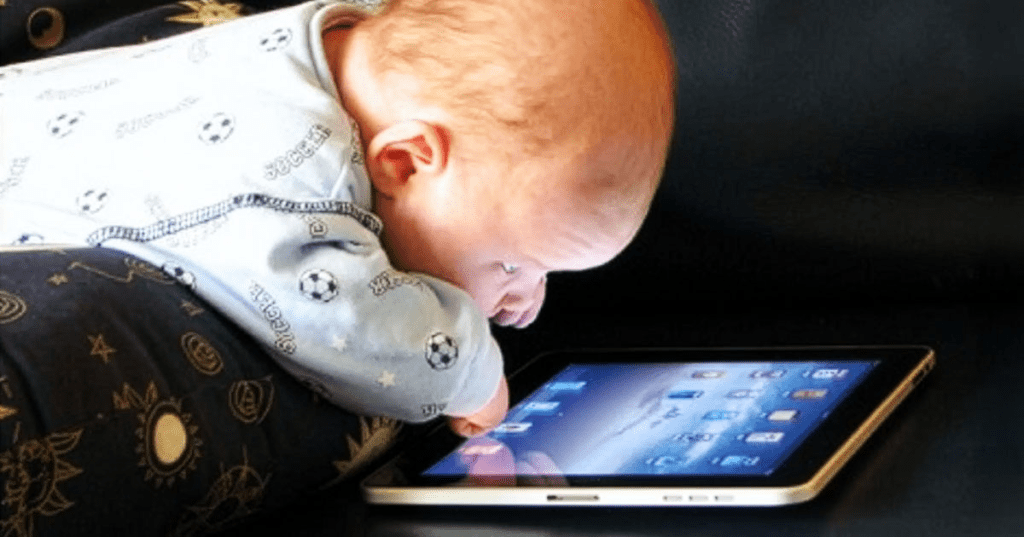
Babies and toddlers under the age of two should not have any intentional screen time, according to a new study warning that early exposure to digital devices may damage children’s long-term development and quality of life.
Researchers at the University of Leeds, UK, said screen use among children under two has been linked to delayed language development, poor sleep, eye health problems, and a higher risk of obesity.
The landmark study is described as the most comprehensive review so far of global research on the issue.
It calls on governments to reconsider their recently published guidance for screen time among children under five.
Current recommendations say children under two should avoid screen time “other than for shared activities that encourage bonding, interaction and conversation.”
The new study goes further.
Researchers warned that any intentional screen time for babies and toddlers under two can be associated with a wide range of potential harms.
Researchers Warn of Long-Term Risks
Rafe Clayton of the University of Leeds said the issue is not being treated seriously enough.
“We have learned that screen use among the under-twos is a global concern that in 2026 is not being adequately addressed,” Clayton said.
“This has implications for a whole generation and their future quality of life,” he added.
Previous research has found that two-year-olds who spend more time on screens tend to have lower vocabulary levels.
Existing guidance from the World Health Organization and the American Academy of Pediatrics already recommends that children under two avoid screen time.
However, researchers said those recommendations are being exceeded globally during the first 1001 days of life, from pregnancy to age two.
That period is considered critical for human development.
Screens Can Replace Bonding, Play, and Sleep
Researchers warned that early screen use can reduce opportunities for babies and toddlers to bond with parents and caregivers.
It can also reduce play with peers, increase the risk of overstimulation, and encourage reliance on devices for emotional regulation.
The study said the findings reflect the pressures of the modern digital environment rather than failures by individual parents.
Dame Andrea Leadsom, founder of the 1001 Critical Days Foundation, said the review should be treated as a serious warning.
“This landmark review is a wake-up call,” Leadsom said.
“The evidence increasingly suggests that screens offer limited benefits for babies and may carry significant risks during the first 1001 days, the most important period of human development,” she added.
Leadsom said parents should not be blamed for a problem created by a digital culture that now pushes screens into nearly every part of daily life.
“Parents must not be blamed for a problem they did not create,” she said.
“Screens are now part of everyday life, and many families are navigating this challenge without the information and support they need,” she added.
“The responsibility cannot rest solely on their shoulders.”
Tech Companies Urged to Stop Targeting Babies
Leadsom also said technology companies need to stop promoting screen content as appropriate for babies when the evidence does not support it.
“Parents should not be presented with content that is labelled or promoted as suitable for babies when the evidence points to the contrary,” she said.
A separate study found that 2 percent of nine-month-old babies had more than three hours of screen time every day.
Researchers said more work is needed to determine which strategies best help parents and caregivers reduce or eliminate screen time for babies.
However, the review identified several approaches that have already been shown to help.
Experts said taking children outdoors and spending time in nature can reduce screen use while supporting physical development and eye health.
They also recommended keeping screens away during mealtimes, which may encourage healthier eating habits.
Non-digital toys can help reduce screen time and support development.
Spending time in the physical presence of others, including meeting, interacting, and playing with other people, also supports social development.
Parents Need Support, Not Blame
The review found that parents’ and caregivers’ screen use is linked to babies’ screen use.
But researchers stressed that parents should not be singled out for blame.
Digital devices are now embedded in everyday life, including work, shopping, health care, and communication with family and friends.
That makes some passive screen exposure difficult to avoid.
The study’s warning is still direct: babies and toddlers under two do not need intentional screen time.
They need sleep, play, movement, language, human interaction, and time away from devices.
For parents trying to raise children in a world dominated by screens, the message from researchers is clear.
The less screen time babies get, the better.
Follow the link for the source… https://slaynews.com/babies-toddlers-under-two-no-screen-time-study-warns/
And,
READ MORE – Teacher Removes All Tech from Classroom, Students’ Reading Ability Surges
 World Freedom